
Demystifying Unix Epoch Time: Seconds Since 1970 and 32-Bit Overflow
Learn what Unix epoch time is, explore how systems store timestamps, and discover why the Year 2038 32-bit overflow happens.
🔧 Interactive Utility Tool
Try the free, 100% secure client-side tool associated with this guide. No registration required.
Demystifying Unix Epoch Time: The Year 2038 Overflow
Looking for a secure way to analyze and optimize your workflows? Here is a quick reference guide on the subject.
Web developer utilities provide local data formatting and media conversion capabilities in the browser. Using modern client-side APIs ensures files are optimized and compared securely without sending data to servers.
In modern computing, databases, APIs, and operating systems do not store dates as "January 19, 2026". Instead, they track time as a single, continuously increasing integer representing the number of elapsed seconds since a specific reference moment. This system is known as Unix Epoch Time (or POSIX time).
In this guide, we'll explain epoch mechanics, trace the Year 2038 overflow bug, and review millisecond translations.
Product-Led CTA: Need to format minified JSON, compare files, or convert media? Use our secure client-side JSON Formatter, Side-by-Side Diff Checker, Unix Timestamp Converter, HEIC to JPG Converter, or Image Compressor.
⚡ Quick Action: Use the Online Tool
This guide pairs with our free, 100% secure client-side utility tool. Process your files or text instantly in-browser.
📐 What is Unix Epoch Time?
The Unix Epoch is defined as 00:00:00 UTC on January 1, 1970.
* The Counter: Every second that passes increments the epoch timestamp integer by $1$.
* Example: 1784368195 represents exactly 1,784,368,195 seconds elapsed since 1970, which maps to July 18, 2026.
* Timezones: Epoch time is always calculated in Coordinated Universal Time (UTC), making it independent of geographic timezone offsets and daylight saving adjustments.
📊 Time Serialization and Parsing Flow
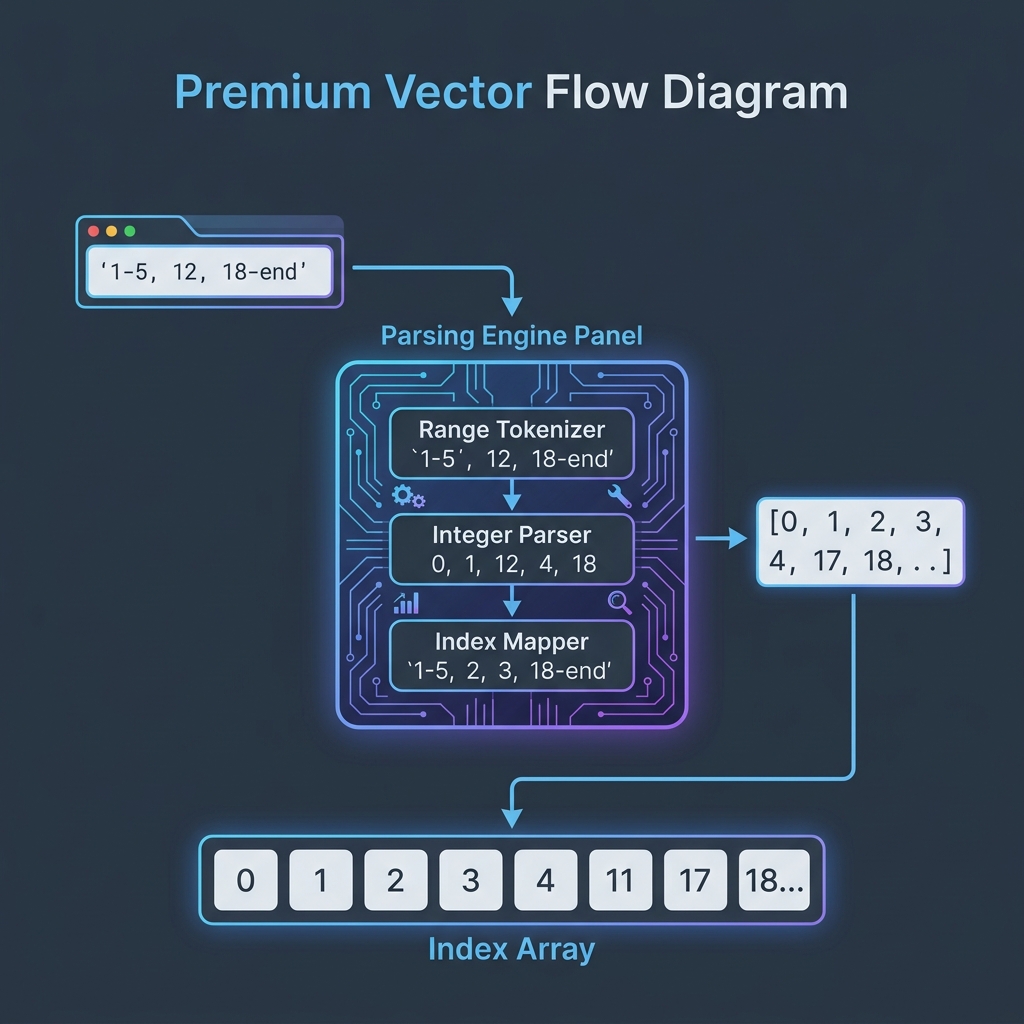
Below is a processing flow showing how data streams parse and serialize epoch integer offsets into human-readable strings:
⚠️ The Year 2038 Problem (Y2K38)
Legacy operating systems and database schemas store the Unix timestamp as a 32-bit signed integer. * The Limit: A 32-bit signed integer can only count up to a maximum value of $2^{31} - 1$, which is $2,147,483,647$. * The Overflow: At exactly 03:14:07 UTC on January 19, 2038, the Unix counter will reach $2,147,483,647$. * The Bug: One second later, the integer will overflow, wrapping around to the minimum negative value $-2,147,483,648$. Systems will interpret this as 20:45:52 UTC on December 13, 1901, causing software crashes, license expirations, and scheduling loops. * The Fix: Modern systems are migrating databases to 64-bit integers, which can store timestamps for over 290 billion years.
💻 Converting Timestamps Safely
When developing database integrations:
* Seconds vs. Milliseconds: JavaScript's Date.now() returns time in milliseconds (13 digits), whereas UNIX APIs default to seconds (10 digits). Always divide JavaScript offsets by 1000 before sending them to backend services.
* Convert Instantly: Use our browser-only Unix Timestamp Converter to parse epoch numbers into localized date strings.
* To format JSON databases containing timestamps, use our JSON Formatter Tool. For binary file transfers, check out the Base64 File Converter.
Join the Urbandigistore Hub
Subscribe to receive premium developer cheat sheets, advanced conversion techniques, and campaign optimization checklists. Zero spam, unsubscribe anytime.
🚀 Launch Interactive Tool
Ready to test this directly? Open the secure web tool in a new sandbox tab.