
Why Password Managers Are Critical: The Case for Zero-Knowledge Security
Discover why password managers are essential for security and learn how zero-knowledge architectures protect database vaults from breaches.
🔧 Interactive Utility Tool
Try the free, 100% secure client-side tool associated with this guide. No registration required.
Why Password Managers Are Critical: Zero-Knowledge Security
Securing user accounts requires state-of-the-art hashing algorithms and entropy measures. Here is how passwords are secured.
A cryptographic password is a secure key verified using hashing algorithms (like bcrypt) and unique random salt values. Checking password complexity entropy ensures the credentials resist modern high-speed brute-force attacks.
Using weak or reused passwords across multiple sites is one of the most common causes of credential theft. To protect your accounts, using a password manager is essential. However, to ensure your stored credentials remain secure even if the provider is breached, you should choose a manager built on a Zero-Knowledge Architecture.
Product-Led CTA: Never reuse passwords or store them in unsafe web browsers. Generate high-entropy, cryptographically secure keys instantly using our secure, client-side Secure Password Generator.
⚡ Quick Action: Use the Online Tool
This guide pairs with our free, 100% secure client-side utility tool. Process your files or text instantly in-browser.
⚙️ How Zero-Knowledge Encryption Works
A zero-knowledge architecture ensures that the password manager service provider has no access to your master password or the plain-text credentials stored in your vault:
- Local Encryption: Your vault is encrypted and decrypted locally on your device using a key derived from your master password.
- Encrypted Storage: The vault data is sent to the provider's servers in its encrypted form. Even if an attacker breaches the provider's databases, they only get encrypted text that is virtually impossible to decrypt without your master password.
- Key Derivation: Managers use standard key derivation functions like PBKDF2 or Argon2 with thousands of iterations to protect against brute-force attacks.
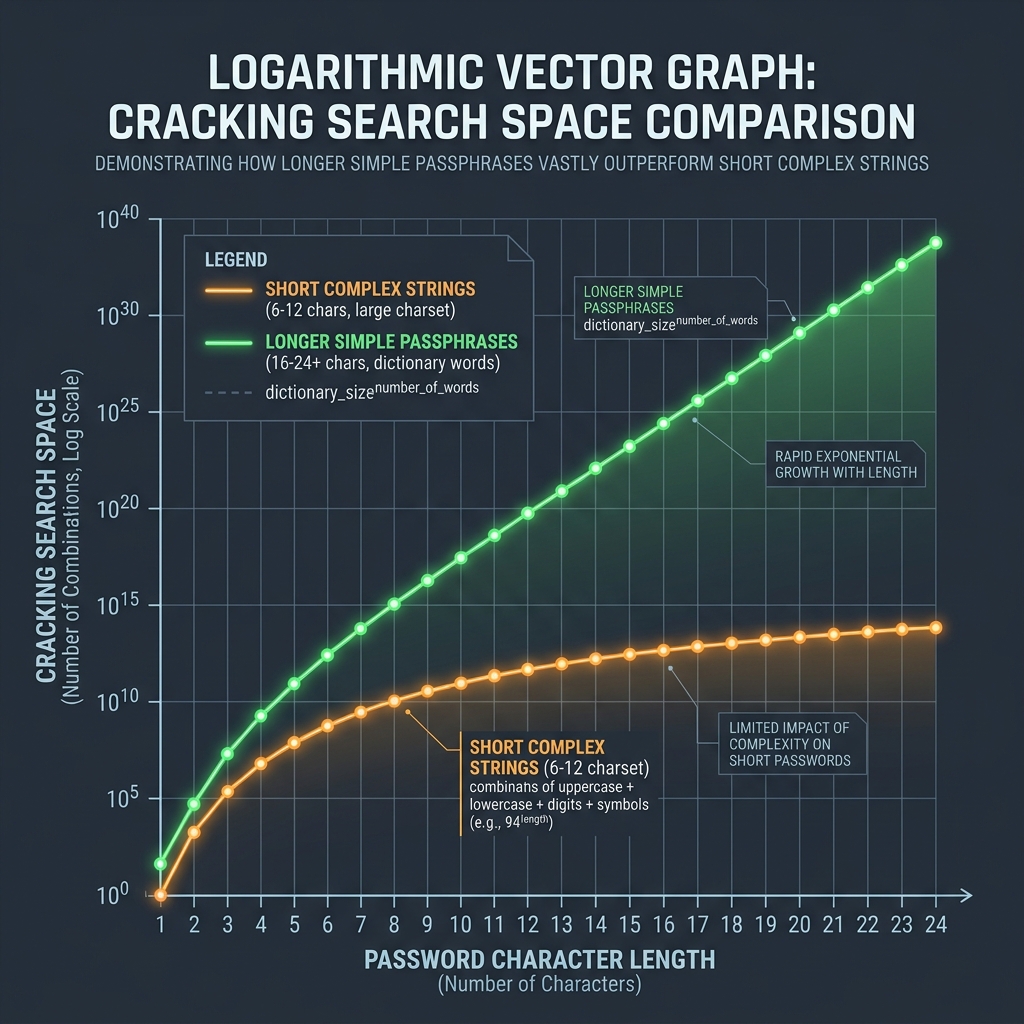
📊 Password Security and Entropy Reference
To resist brute-force attacks, it is critical to use long, random passwords. Refer to the logarithmic curve below to see how character length affects complexity:
🛡️ Best Practices for Password Security
To keep your digital accounts secure: * Set a Strong Master Password: Use a unique, long passphrase that you do not reuse anywhere else. * Enable Two-Factor Authentication (2FA): Add an extra layer of security to your vault login. * Generate High-Entropy Keys: Use our browser-based Secure Password Generator to create custom, random keys locally. * Read Why Password Managers Are Critical and Why Browser Passwords Are Vulnerable to learn more.
Join the Urbandigistore Hub
Subscribe to receive premium developer cheat sheets, advanced conversion techniques, and campaign optimization checklists. Zero spam, unsubscribe anytime.
🚀 Launch Interactive Tool
Ready to test this directly? Open the secure web tool in a new sandbox tab.